


Anxiety
Anxiety itself isn’t dangerous. It’s uncomfortable. And many of the things we do to feel better or safer in the moment actually keep the anxiety going.
When worry starts taking over
Anxiety is a normal and adaptive human emotion. It helps us prepare for challenges, respond to potential threats, and navigate uncertainty. However, when anxiety becomes persistent, overwhelming, or begins interfering with daily life, it can feel exhausting and even debilitating.
Many people struggling with anxiety find themselves constantly worrying about the future, replaying memories, second-guessing decisions, or preparing for worst-case scenarios. Although these habits often develop as attempts to feel more in control, they can leave people feeling trapped in a cycle of fear, doubt, and uncertainty.
The good news is that anxiety is highly treatable. Through evidence-based therapy, it is possible to better understand anxiety and regain confidence in your ability to handle life's challenges.
You may be experiencing:
Excessive or difficult-to-control worry
Racing thoughts or overthinking
Constantly preparing for worst-case scenarios
Difficulty relaxing or "switching off"
Feeling on edge or easily startled
Physical symptoms such as muscle tension, headaches, nausea, or a racing heart
Seeking reassurance from others
Avoiding situations that trigger anxiety
Difficulty making decisions due to fear of making the wrong choice
Trouble concentrating
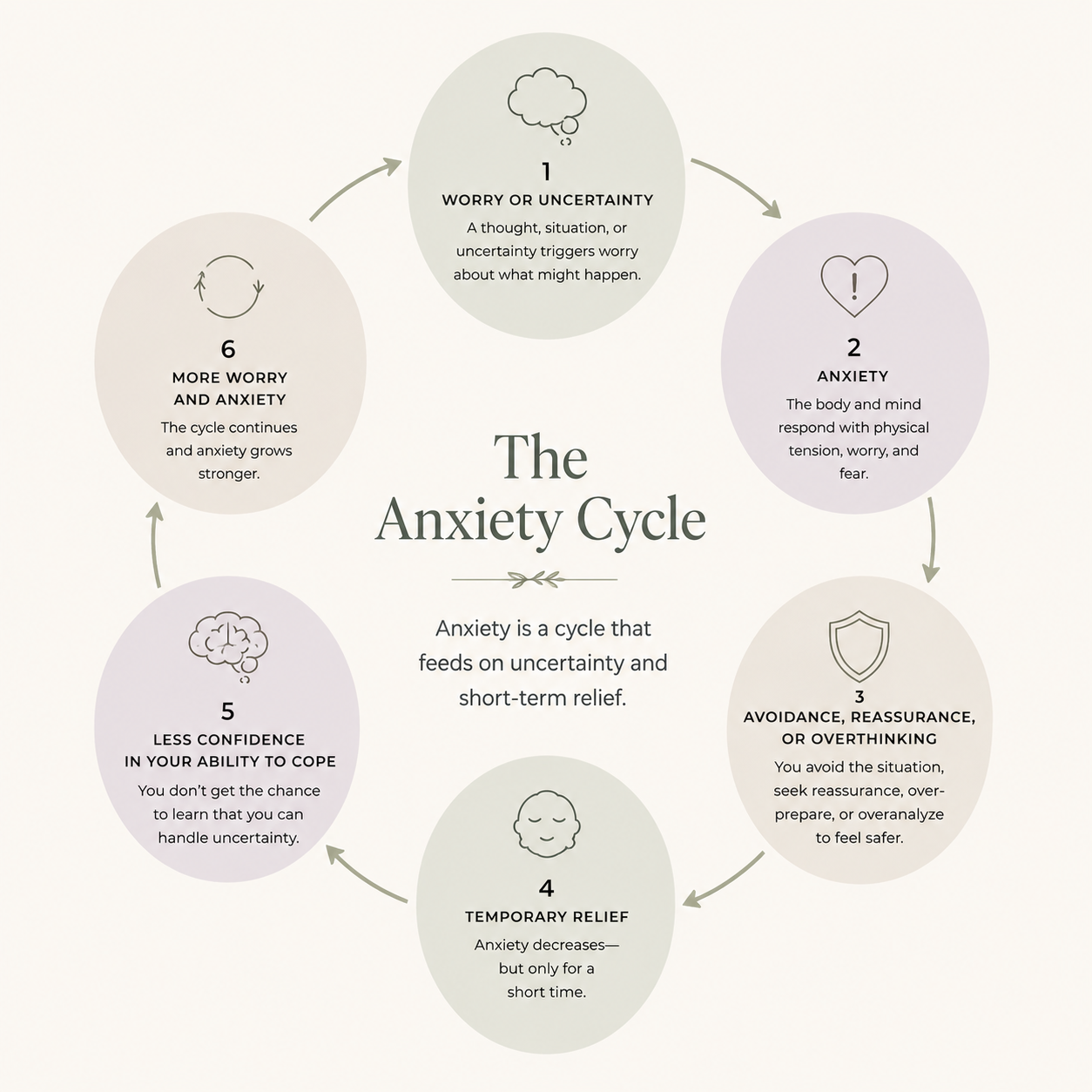
The Anxiety Cycle
How therapy can help
Treatment begins with understanding how anxiety affects your thoughts, emotions, behaviours, and daily life. Together, we'll identify the patterns that keep anxiety going and develop a treatment plan tailored to your goals and circumstances.
Using evidence-based approaches such as Cognitive Behavioural Therapy (CBT) and Acceptance and Commitment Therapy (ACT), we'll work together to help you develop a different relationship with anxiety and build confidence in your ability to navigate uncertainty.
Depending on your needs, therapy may include:
Understanding how anxiety operates and why it persists
Identifying avoidance behaviours and safety strategies
Learning to respond differently to worry and anxious thoughts using skills such as mindfulness
Developing skills to manage physical symptoms of anxiety
Gradually facing feared situations or uncertainties
Building tolerance for uncertainty and discomfort
Reducing reassurance seeking and overthinking
Developing strategies to maintain progress over time
The goal of therapy is not to eliminate anxiety completely. Anxiety is a normal part of life. Instead, treatment focuses on helping anxiety take up less space so that it no longer controls your decisions, relationships, or daily activities.
Frequently Asked Questions
Is anxiety a sign that something is really wrong?
Not necessarily. Anxiety is a normal emotion that everyone experiences. Problems arise when anxiety becomes excessive, persistent, or begins interfering with daily life.
Will therapy get rid of my anxiety completely?
The goal of therapy is not to eliminate anxiety altogether. Rather, therapy helps you develop a healthier relationship with anxiety so that it has less influence over your thoughts, behaviours, and decisions.
What if I’ve always been an anxious person?
Many people feel anxiety has been part of their personality for as long as they can remember. Even when anxiety has been present for years, meaningful change is possible through evidence-based treatment.
You can’t eliminate anxiety completely - but you can learn to manage it. Book a consultation below to see how I can help.
Working with Dr. Angela Lachowski
I provide virtual assessment and therapy for adults across Ontario using evidence-based treatments tailored to your unique needs and goals.
Did you know?
Anxiety often persists not because a situation is dangerous, but because the brain never gets the opportunity to learn that it is safe.
Avoidance, reassurance seeking, excessive planning, and other safety behaviours can provide temporary relief while unintentionally keeping anxiety going over time.
Anxiety often begins with a realistic concern, uncertainty, or stressful life event. In response, it's natural to try to reduce the discomfort by avoiding situations, seeking reassurance, over-preparing, or repeatedly analyzing potential outcomes.
While these strategies may reduce anxiety in the short term, they can prevent the brain from learning that uncertainty is manageable and that feared outcomes are often less likely or less catastrophic than they seem.
Over time, anxiety becomes less about the original concern and more about the ongoing effort to eliminate uncertainty. The more we try to guarantee safety, certainty, or control, the more anxiety tends to grow.
Learning to respond differently to uncertainty is often a key part of overcoming anxiety.
