


Obsessive-Compulsive Disorder (OCD)
You are not your thoughts. A simple statement that makes all the difference when working on the often very upsetting thoughts that comes with OCD.
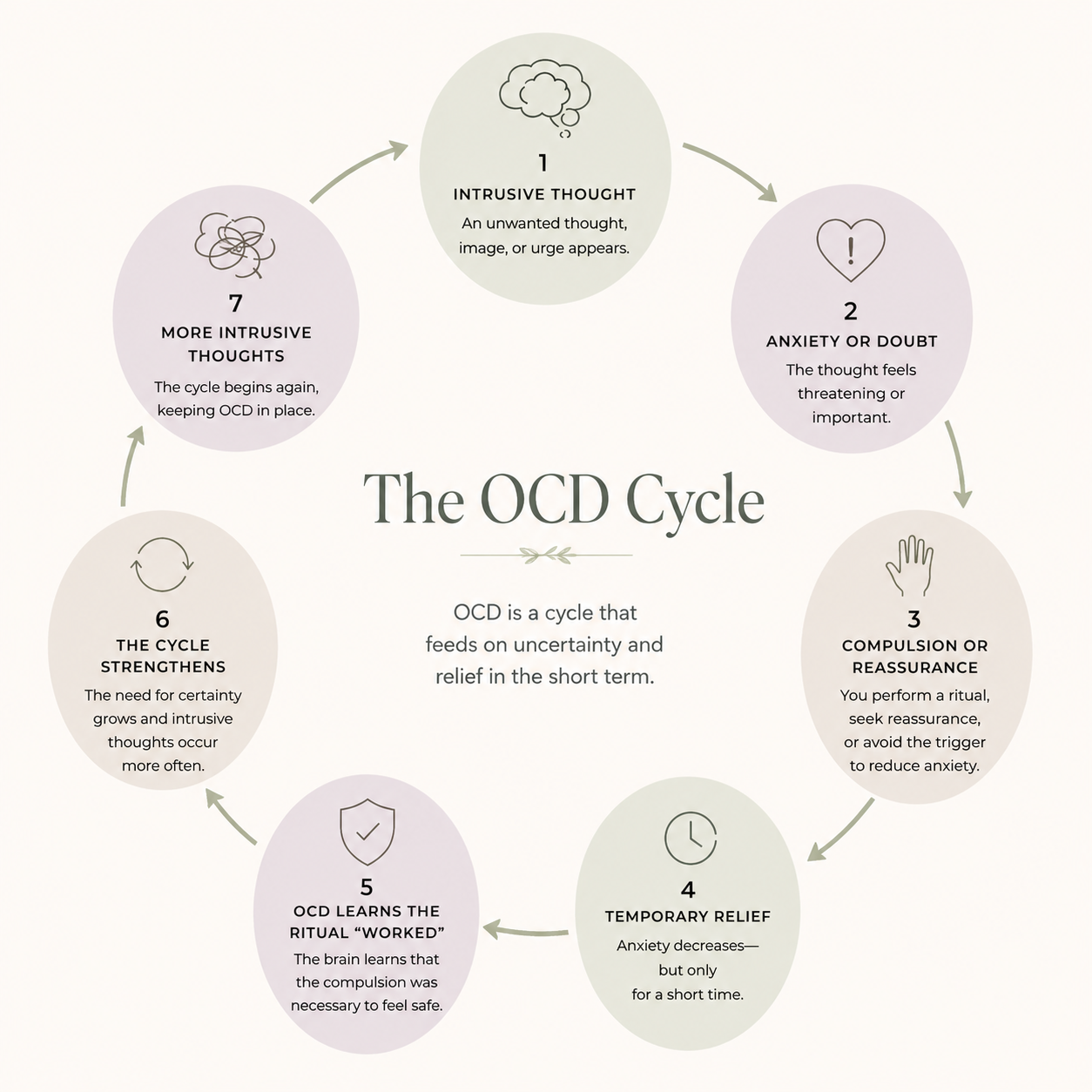
If you're struggling with obsessive-compulsive disorder (OCD), you may feel trapped in a cycle of intrusive thoughts, anxiety, and repetitive behaviours or mental rituals. Many people with OCD recognize that their fears don't fully make sense, yet the urge to seek certainty or relieve anxiety can feel overwhelming.
One of the most painful aspects of OCD is the shame and isolation it often creates. People frequently worry that they will be judged or misunderstood if they talk about the thoughts they're experiencing. In reality, intrusive thoughts are a normal part of being human. What distinguishes OCD is not the content of the thoughts, but the meaning the brain assigns to them and the compulsive behaviours that follow.
The good news is that OCD is highly treatable. Evidence-based therapies, particularly Exposure and Response Prevention (ERP), can help you break free from the cycle of obsessions and compulsions and reclaim the parts of your life that OCD has taken from you.
You may be experiencing:
Persistent intrusive thoughts, images, or urges that feel unwanted or distressing
Excessive checking (locks, appliances, mistakes, health concerns)
Repeated washing, cleaning, or contamination fears
Mental rituals such as reviewing memories, counting, or repeating phrases
Reassurance seeking from loved ones or online searches
excessive use of AI
Fear of making mistakes or causing harm
A strong need for certainty or things to feel "just right"
Avoiding people, places, or situations that trigger anxiety
Spending significant time each day managing obsessions or compulsions
Understanding the OCD Cycle
How therapy can help
Treatment begins with understanding how OCD shows up in your daily life. Together, we'll identify the specific obsessions, compulsions, avoidance behaviours, and patterns that keep the cycle going. This allows us to develop a treatment plan tailored to your unique experiences and goals.
Using evidence-based approaches such as Exposure and Response Prevention (ERP), we'll work together to help you respond differently to intrusive thoughts and reduce the behaviours that keep OCD stuck.
Depending on your needs, therapy may include:
Learning how OCD operates and why it persists
Identifying compulsions such as reassurance seeking, avoidance behaviours, or internal mental thought patterns
Developing a healthier relationship with intrusive thoughts
Learning to tolerate uncertainty and doubt
Gradually reducing compulsive behaviours and rituals
Addressing perfectionism, over-responsibility, and self-criticism
Building confidence in your ability to cope with anxiety and doubt
Developing strategies to maintain progress and prevent relapse
The goal of therapy is not to eliminate intrusive thoughts entirely. Instead, treatment focuses on helping you respond to those thoughts differently so they become less distressing and have less influence over your daily life.
Frequently Asked Questions
What if my intrusive thoughts are violent, sexual, or disturbing?
This is one of the most common concerns people with OCD have. Intrusive thoughts can involve themes that feel deeply upsetting precisely because they conflict with your values. Experiencing these thoughts does not mean that they reflect your character, or that you want to act on them. They are a recognized feature of OCD and can be effectively treated through evidence-based therapy.
Will exposure therapy make my anxiety worse?
Exposure and Response Prevention (ERP) does involve gradually facing feared situations, thoughts, or uncertainties rather than avoiding them. While anxiety may temporarily increase during an exposure, this is an important part of helping the brain learn that it can tolerate uncertainty without relying on compulsions. Treatment is always collaborative, individualized, and completed at a pace that feels manageable.
Can OCD be treated without medication?
Many people experience significant improvement through psychotherapy alone, particularly with Exposure and Response Prevention (ERP). For some individuals, medication may also be helpful. Decisions regarding medication are best made in consultation with your family physician or psychiatrist.
How long does treatment usually take?
The length of treatment varies depending on the severity of symptoms, the amount of time OCD has been present, and whether other concerns such as anxiety or depression are also being addressed. Many people begin noticing meaningful improvements after only a few sessions!
Ready to start a life free from the trap of OCD?
OCD can make life feel smaller. It can pull you away from relationships, activities, opportunities, and experiences that matter to you. Many people spend years trying to manage symptoms on their own before seeking support.
The good news is that OCD is highly treatable. Through evidence-based therapy, it is possible to break free from the cycle of obsessions and compulsions and begin living a fuller, more meaningful life.
Working with Dr. Angela Lachowski
I provide virtual assessment and therapy for adults across Ontario using evidence-based treatments tailored to your unique needs and goals.
Did you know?
Many people with OCD delay seeking treatment because they fear their intrusive thoughts mean something about their character.
In fact, most people (if not all) experience all kinds of intrusive thoughts. A thought itself is not inherently meaningful.
