


Obsessive-Compulsive Disorder (OCD)
You are not your thoughts. A simple statement that makes all the difference when working on the often very upsetting thoughts that comes with OCD.
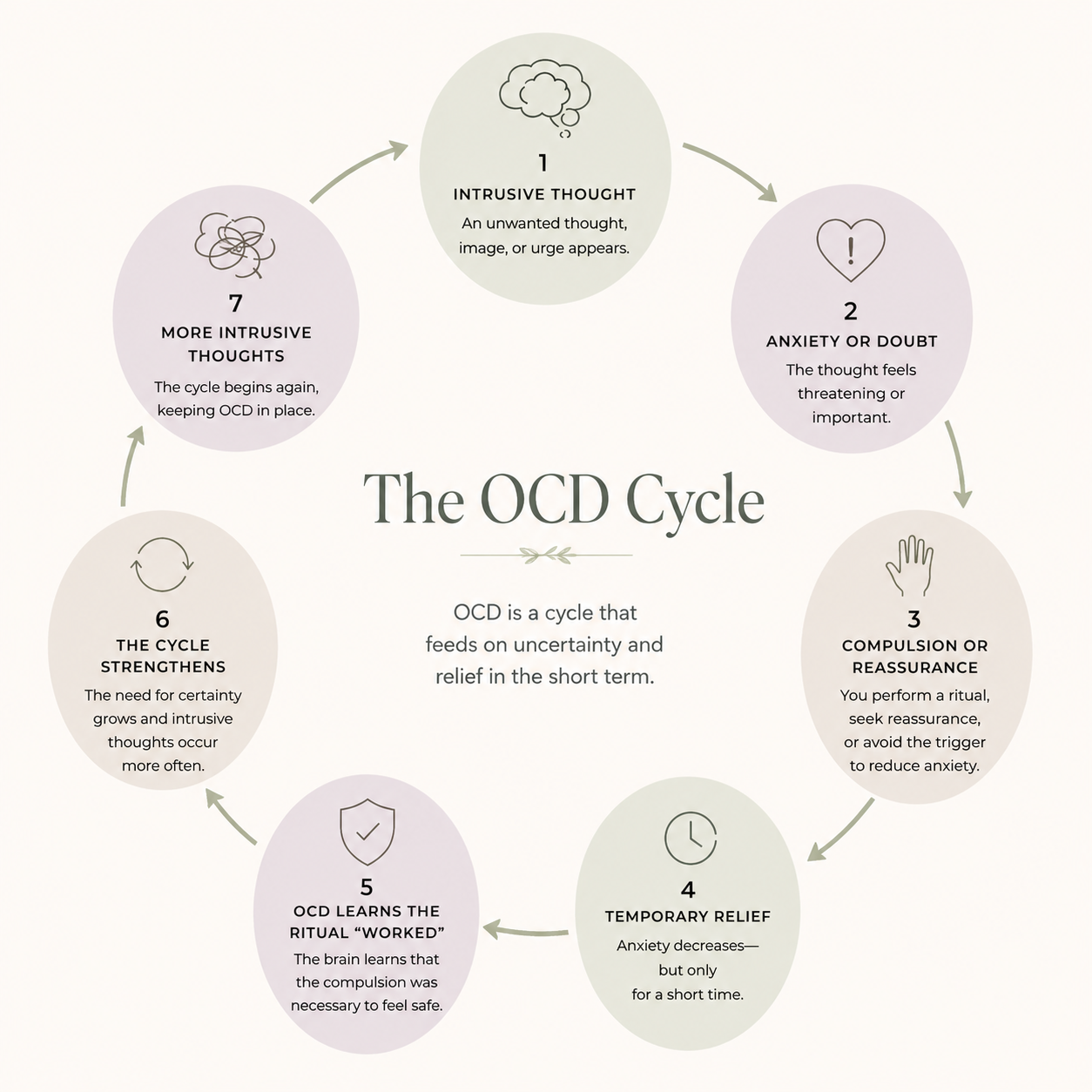
If you're struggling with obsessive-compulsive disorder (OCD), you may feel trapped in a cycle of intrusive thoughts, anxiety, and repetitive behaviours or mental rituals. Many people with OCD recognize that their fears don't fully make sense, yet the urge to seek certainty or relieve anxiety can feel overwhelming.
One of the most painful aspects of OCD is the shame and isolation it often creates. People frequently worry that they will be judged or misunderstood if they talk about the thoughts they're experiencing. In reality, intrusive thoughts are a normal part of being human. What distinguishes OCD is not the content of the thoughts, but the meaning the brain assigns to them and the compulsive behaviours that follow.
The good news is that OCD is highly treatable. Evidence-based therapies, particularly Exposure and Response Prevention (ERP), can help you break free from the cycle of obsessions and compulsions and reclaim the parts of your life that OCD has taken from you.
You may be experiencing:
Persistent intrusive thoughts, images, or urges that feel unwanted or distressing
Excessive checking (locks, appliances, mistakes, health concerns)
Repeated washing, cleaning, or contamination fears
Mental rituals such as reviewing memories, counting, or repeating phrases
Reassurance seeking from loved ones or online searches
excessive use of AI
Fear of making mistakes or causing harm
A strong need for certainty or things to feel "just right"
Avoiding people, places, or situations that trigger anxiety
Spending significant time each day managing obsessions or compulsions
Understanding the OCD Cycle
How therapy can help
Treatment begins with understanding the specific factors contributing to your sleep difficulties. While stress or anxiety may trigger insomnia, ongoing sleep problems are often maintained by changes in sleep habits, unhelpful beliefs about sleep, and understandable attempts to compensate for poor sleep.
During CBT-I treatment, you will learn to:
Improve sleep efficiency through behavioural strategies
Establish a consistent sleep schedule
Reduce time spent awake in bed
Address racing thoughts and nighttime worry
Reduce daytime worry and anxiety about sleep
Change unhelpful beliefs about sleep
Develop relaxation and wind-down routines
Learn strategies to prevent relapse and maintain healthy sleep over time
CBT-I is highly effective for many people experiencing chronic insomnia, whether it occurs on its own or alongside anxiety, depression, chronic pain, or other health concerns.
Frequently Asked Questions
Is CBT-I better than sleeping medication?
Clinical practice guidelines recommend CBT-I as the first-line treatment for chronic insomnia because it produces lasting improvements without the side effects or dependency risks associated with many sleep medications. Medication may still play an important role for some individuals, and treatment decisions are best made in consultation with your physician.
How long does treatment usually take?
Dr. Lachowski uses a CBT-I protocol of approximately 4 -6 sessions, although this varies depending on the nature of the sleep difficulties and whether other concerns, such as anxiety or depression, are also being addressed.
What if anxiety is keeping me awake?
Anxiety and insomnia often reinforce one another. Treatment addresses both the thoughts and behaviours that contribute to poor sleep while helping reduce the anxiety that develops around bedtime.
Will I have to stop drinking alcohol or coffee, or change my entire lifestyle?
Not necessarily. Therapy focuses on identifying the factors most relevant to your sleep and making realistic, sustainable changes. Recommendations are individualized rather than based on rigid rules.
Better sleep is possible.
Whether your sleep difficulties began recently or have been present for years, effective treatment can help you rebuild healthy sleep patterns and feel more rested again.
Working with Dr. Angela Lachowski
I provide virtual assessment and therapy for adults across Ontario using evidence-based treatments tailored to your unique needs and goals.
Did you know?
Many people with OCD delay seeking treatment because they fear their intrusive thoughts mean something about their character.
In fact, most people (if not all) experience all kinds of intrusive thoughts. A thought itself is not inherently meaningful.
